
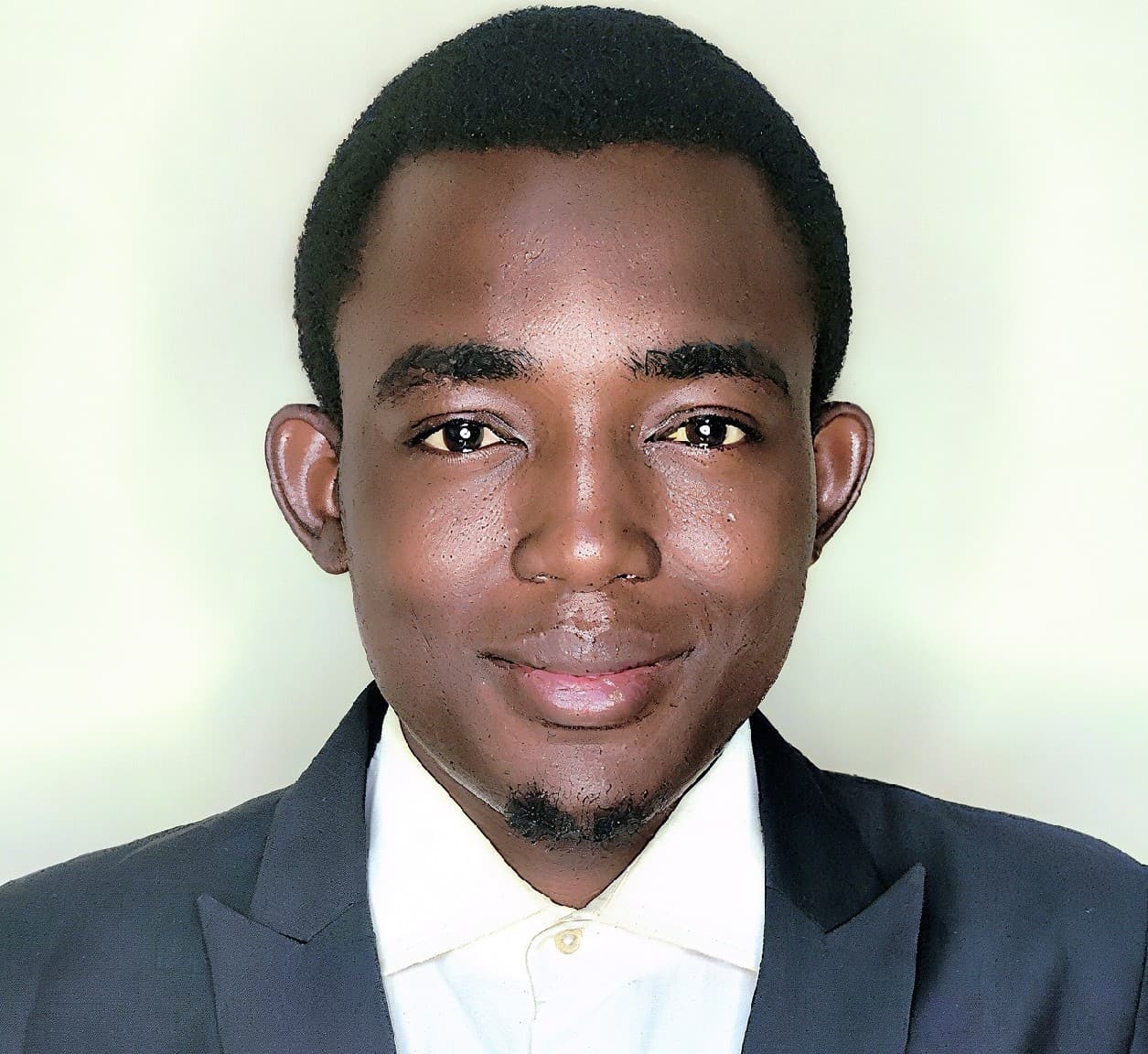
Kasim Abdulrahman
Research Assistant
Role
Research Assistant
About Kasim Abdulrahman
Kasim Abdulrahman (B.Sc. and M.Sc in view) is a microbiologist with multidisciplinary research expertise spanning vaccinology, molecular virology, vector biology, thermal biology, disease modeling, bioinformatics, and data science. He is currently a member of the Global Outreach of the American Society for Microbiology, a member of the ASM Connect Community Champions, and a member of the African Virologists Network.
Abdulrahman has contributed to the development, and verification of two indigenous vaccine candidates against COVID-19 and Lassa fever under two Tertiary Education Trust Fund (TETFund)-funded grants awarded to Prof. Bashir Muhammad Bello. Through these projects, he developed strong expertise in immunoinformatics, molecular docking and dynamic simulation, vaccine design, cloning and sub-cloning techniques, conventional and real-time PCR, cell culture, and enzyme-linked immunosorbent assay (ELISA).
In January 2025, Abdulrahman joined CTIDR as a Research Assistant, where he investigates the effects of temperature and humidity variations on the survival, reproduction, and thermal performance of Aedes and Anopheles mosquitoes. This project is supported by the Medical Research Foundation. He currently oversees the Climate Simulation Laboratory and has contributed to the installation, programming, and operational optimization of Memmert HPPeco climate chambers for controlled-environment experiments. He also has recently coordinated installation of HOBO data loggers across six ecological zones of Nigeria for the CTIDR.
As part of this work, he developed MAHE’S cups, modified EAgal Plates methods, and Ketchup-RT32 Plates methods for mosquito rearing and evaluation of climatic effects on the fecundity and fertility of Aedes and Anopheles mosquitoes under controlled environmental conditions. He also designed user manuals and instructional videos, facilitated technical training on the installation and maintenance of weather stations for climate data collection, and developed standard operating procedures for the collection, packaging, storage, hatching, and transportation of Aedes mosquito eggs under both laboratory and field conditions.
In addition to his laboratory and field research experience, Abdulrahman is proficient computational analyses, including primer design, sequence retrieval, phylogenetic analysis, transcriptomic data analysis, and viral diversity studies. He also has strong quantitative and data visualization skills using R, Python, Jamovi, and Tableau