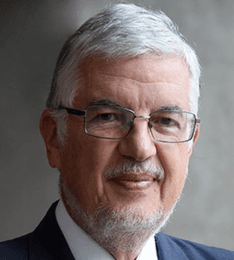
Professor José María Gutiérrez
Member
Role
Member
Institution
Emeritus Professor at the Instituto Clodomiro Picado and School of Microbiology, University of Costa Rica
Committee
External Advisory BoardAbout Professor José María Gutiérrez
Professor José María Gutiérrez is Emeritus Professor at the Instituto Clodomiro Picado and School of Microbiology, University of Costa Rica, where he has taught immunology, biochemistry, cellular pathology and research methods. He previously served as Director of the Instituto Clodomiro Picado and held several research and postgraduate leadership positions. His research has focused on the biochemistry, toxicology and mechanisms of action of snake venoms, particularly venom-induced local tissue damage, coagulopathy and haemostatic disturbance; as well as the development and preclinical assessment of antivenoms and novel toxin inhibitors. He has also made major contributions to understanding snakebite envenoming as a neglected tropical disease and public-health problem affecting impoverished rural populations.
Professor Gutiérrez has coordinated multinational research, capacity-strengthening and antivenom-development initiatives across Latin America, sub-Saharan Africa and other underserved regions. He has advised the Pan American Health Organization and contributed technical expertise to WHO activities concerning antivenom quality, availability and snakebite control. His work has helped connect fundamental toxinology with antivenom production, clinical management, community engagement and health-system strengthening. Among his distinctions is the 2015 Redi Award, the International Society on Toxinology’s premier recognition for outstanding contributions to toxinology. He has also received major Costa Rican honours, including the Rodrigo Facio Brenes Award and the National Magón Culture Award.
Professor Gutiérrez brings exceptional value to the CTIDR External Advisory Board. His experience represents a powerful model of how a research institution in a middle-income country can integrate discovery science, locally manufactured biological products, quality assurance, professional training and public-health delivery. His expertise will help CTIDR on developing its Snakebite Epidemiology and Toxinology programme; establishing clinically relevant venom and antivenom research; building collaborations with hospitals, affected communities, regulators and antivenom manufacturers; and translating laboratory findings into accessible interventions for northern Nigeria and the wider West African region. His experience in institutional development, equitable international partnerships and regional scientific capacity-building would also help CTIDR establish sustainable research platforms with genuine African ownership and measurable public-health impact. Overall, his combination of scientific distinction, product-development expertise, global policy experience and commitment to neglected populations makes him exceptionally well suited to guide CTIDR’s strategic growth and translational mission.